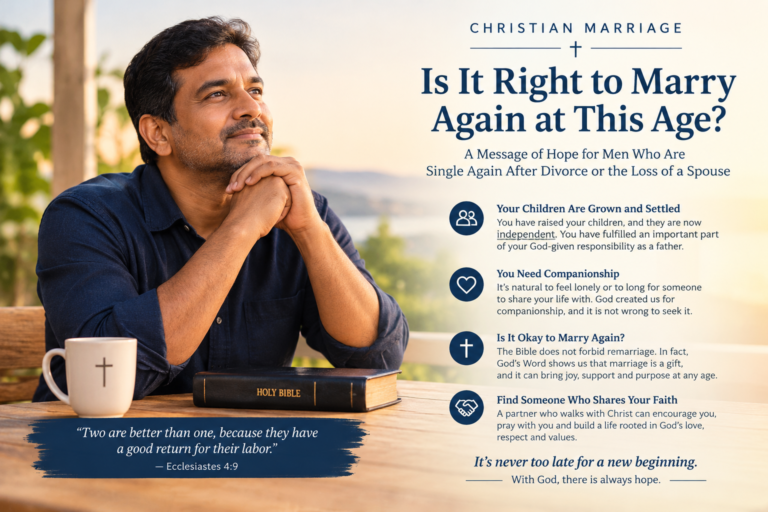
It’s tempting to think of stewardship – managing time, money, and gifts wisely – as a “married life” topic, something to figure out once there’s a household budget to share. In reality, the habits formed during singleness rarely disappear at the wedding. They simply get shared with someone else.
1. Required: Faithfulness, Not Perfection
1 Corinthians 4:2 (KJV) — “Moreover it is required in stewards, that a man be found faithful.”
Everything a person has – time, income, abilities – belongs first to God, entrusted to us to manage well. This applies just as much before marriage as after. The standard is faithfulness with what’s currently in your hands, not waiting for more responsibility before taking stewardship seriously.
2. Why This Matters Before You Marry
Financial habits, how you spend free time, and whether you use your gifts to serve others are all visible patterns a future spouse will inherit, for better or worse. Entering marriage with existing debt from careless spending, or a habit of idle time rather than purposeful living, doesn’t disappear simply because two incomes and two calendars are now combined.
3. Practical Stewardship for Singles
- Build a simple budget and stick to it: Including giving, saving, and spending with intention.
- Address existing debt honestly: Working toward financial health now, rather than assuming marriage will fix it.
- Use your time purposefully: Investing in growth, service, and relationships, not just passing time.
- Discover and use your gifts now: Serving the church and others with your abilities, rather than waiting for “someday.”
4. A Gift to Your Future Spouse
Good stewardship, built in singleness, becomes one of the quiet gifts you bring into marriage – not a sudden character change expected on the wedding day, but a pattern of faithfulness a future spouse can trust from the very beginning.
About the Author