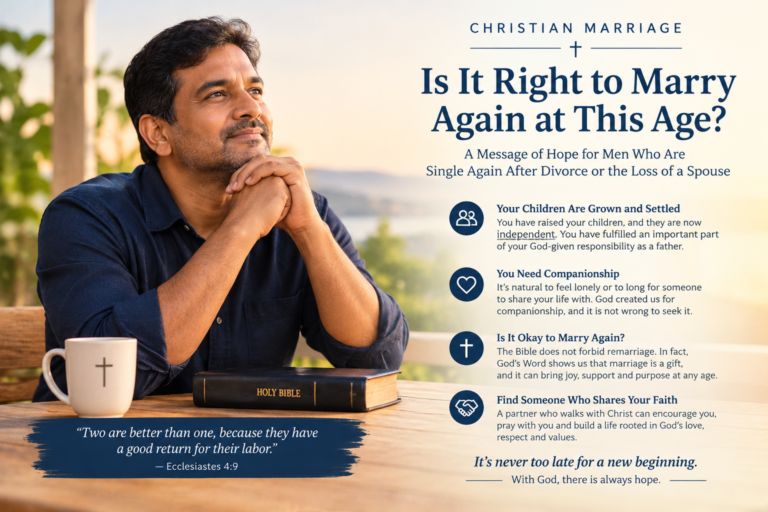
Marriage is a sacred covenant instituted by God, built on love, mutual respect, and spiritual unity. However, life often brings unexpected turns—whether through the heartbreaking loss of a spouse or the pain of a dissolved marriage. For many Christians, the thought of entering a second marriage brings up deep questions: Is remarriage biblical? Does God permit a second chance at marital happiness? How can I ensure my next relationship honors Christ?
Understanding what the Bible says about second marriage provides clarity, peace, and spiritual direction for believers seeking to build a God-honoring future.
1. What Scripture Says About Remarriage
The Bible approaches marriage with deep reverence, but it also provides clear guidance regarding second marriages depending on the circumstances.
A. Remarriage After Widowhood
Scripture clearly affirms that a surviving spouse is free to remarry after the death of their husband or wife. In the New Testament, marriage is understood as an earthly covenant that concludes upon death.
Romans 7:2 — “For example, by law a married woman is bound to her husband as long as he is alive, but if her husband dies, she is released from the law that binds her to him.”
1 Corinthians 7:39 — “A woman is bound to her husband as long as he lives. But if her husband dies, she is free to marry anyone she wishes, but he must belong to the Lord.”
For widows and widowers, seeking a second marriage is fully supported by Scripture, provided the new partner shares the same Christian faith.
B. Remarriage After Divorce
The Bible views divorce with gravity, encouraging reconciliation whenever possible (1 Corinthians 7:10–11). However, Scripture outlines specific biblical grounds where divorce and subsequent remarriage are acknowledged:
- Marital Unfaithfulness (Adultery): In Matthew 19:9, Jesus states, “I tell you that anyone who divorces his wife, except for sexual immorality, and marries another woman commits adultery.” Where marital covenant vows are broken through unrepentant infidelity, biblical allowances for divorce and remarriage exist.
- Abandonment by an Unbelieving Spouse: In 1 Corinthians 7:15, Paul writes, “But if the unbeliever leaves, let it be so. The brother or the sister is not bound in such circumstances; God has called us to live in peace.”
While divorce should never be entered into lightly, God offers grace, healing, and the possibility of restoration when a past marriage ends under biblical grounds or through circumstances beyond one’s control.
2. Essential Biblical Principles Before Remarrying
If you are considering a second marriage, careful prayer, self-reflection, and adherence to biblical wisdom are vital to setting a strong foundation.
1. Ensure Spiritual Compatibility (“Equally Yoked”)
Faith must be the center of your new relationship. Re-entering marriage with someone who does not share your devotion to Christ can create spiritual misalignment.
2 Corinthians 6:14 — “Do not be yoked together with unbelievers. For what do righteousness and wickedness have in common? Or what fellowship can light have with darkness?”
2. Prioritize Emotional & Spiritual Healing
Before opening your heart to a new partner, ensure you have processed past grief, hurt, or bitterness. Entering a new relationship carrying emotional baggage can strain your new union.
- Forgive and let go: Practice forgiveness toward past circumstances or former partners (Colossians 3:13).
- Find completeness in Christ: A healthy marriage consists of two whole individuals rooted in God’s love, not two hurting people expecting each other to fill spiritual gaps.
3. Grace and Wisdom in Blending Families
In second marriages, blending families or integrating children from a previous marriage requires patience, open communication, and unconditional love.
- Allow children time and space to adjust.
- Choose a partner who is prepared to love, accept, and nurture stepchildren as their own.
- Honor family roles with humility and God-given wisdom.
4. Seek Pastoral Counseling and Wise Guidance
Never navigate the decision to remarry alone. Involving trusted Christian mentors or pastors helps ensure clarity and discernment.
Proverbs 15:22 — “Plans fail for lack of counsel, but with many advisers they succeed.”
Premarital counseling tailored specifically for second marriages helps address potential challenges—such as financial integration, co-parenting dynamics, and personal expectations—before saying “I do.”
3. Qualities to Look for in a Second Partner
When discerning a potential bride or groom for a second marriage, look beyond external attributes and focus on character rooted in the Spirit:
| Essential Quality | Biblical Standard | Why It Matters |
| Active Faith in Christ | Galatians 5:22–23 | Ensures a shared spiritual vision and commitment to God’s word. |
| Emotional Maturity | Ephesians 4:2–3 | Helps resolve conflicts with humility, patience, and gentleness. |
| Integrity & Honesty | Proverbs 10:9 | Builds the trust necessary for a lasting, secure covenant. |
| Acceptance of Family | 1 Corinthians 13:4–7 | Essential if children or step-family dynamics are involved. |
| Financial Responsibility | Luke 16:10 | Promotes stability and transparency in managing household stewardship. |
4. Embracing God’s Gift of New Beginnings
God is a God of restoration, redemption, and renewal. If your path leads toward a second marriage aligned with biblical principles, move forward with confidence and faith rather than guilt or hesitation.
Isaiah 43:18–19 — “Forget the former things; do not dwell on the past. See, I am doing a new thing! Now it springs up; do you not perceive it? I am making a way in the wilderness and streams in the wasteland.”
Walking Forward in Faith
A Christian second marriage, when built on Christ as the foundation, can be a beautiful reflection of God’s grace, comfort, and redeeming love. By seeking God through prayer, honoring biblical boundaries, and choosing a godly partner, believers can build a strong, joyful, and lifelong union.
About the Author